The Evolution of Robots: From Forced Labor to Smart Automation
The concept of artificial intelligence and automated workers has captivated humanity for centuries, but the term "robot" itself has a surprisingly recent and evocative origin. Far from the sleek, intelligent machines we envision today, the word initially conjured images of forced labor and servitude. This journey, from the Slavic word for "drudgery" to the sophisticated, smart automation systems shaping our modern world, tells a compelling story of human ingenuity, ambition, and the relentless pursuit of efficiency. Understanding this evolution of the
robot not only illuminates its past but also provides crucial context for its transformative role in our present and future.
The Etymological Roots of "Robot": From Drudgery to Innovation
The term "robot" made its dramatic debut in the 1920 science fiction play *R.U.R.* (Rossum's Universal Robots) by Czech playwright Karel Čapek. Interestingly, Čapek himself credited his brother Josef with coining the term. They chose "roboti" – the plural of the Czech noun *robota* – to replace an initial Latin-derived term. *Robota* is deeply rooted in Slavic history, denoting "forced labor," "drudgery," or "corvée" – the involuntary work performed by serfs. This etymology, tracing back to the Old Church Slavonic *rabota* from *rabъ* ("slave"), powerfully reflects the initial human vision for these artificial beings: tireless workers designed to alleviate, or even entirely supplant, human toil.
In *R.U.R.*, Čapek's "robots" were not the electromechanical devices we recognize today, but rather organic, artificial constructs, mass-produced to serve humanity. The play explored profound themes of exploitation, rebellion, and the very definition of humanity – questions that remain relevant in contemporary debates about advanced AI. The word's adoption into English, following the play's 1921 Prague premiere and 1922 London translation, quickly supplanted earlier terms like "automaton" for humanoid workers, solidifying its place in popular culture and scientific discourse. This shift from an organic, exploitable worker to an increasingly autonomous, electromechanical device marks a fascinating divergence from its original conceptualization, yet the underlying desire to automate labor persists.
Early Automatons to Modern Marvels: A Historical Timeline
While the term "robot" is modern, the aspiration for self-operating machines has a long and storied history. Ancient civilizations marveled at sophisticated automatons – mechanical birds that sang, or figures that poured wine – often crafted for entertainment or religious ritual. The medieval period saw further development of intricate mechanical devices, but these were largely pre-programmed, fixed-sequence mechanisms. The true precursors to modern robotics began to emerge in the mid-20th century, spurred by industrial needs and technological advancements.
A pivotal moment arrived in 1961 with George Devol's Unimate, the first digitally operated programmable robot arm. Installed on an assembly line at General Motors, Unimate revolutionized manufacturing by performing repetitive, dangerous tasks like die casting. This innovation marked a critical turning point: robots were no longer mere automatons following a fixed script, but reprogrammable machines capable of carrying out complex series of actions with precision and adaptability. This era laid the groundwork for industrial robots, transforming factories and signaling the dawn of an age where machines could truly augment and eventually automate human labor. The iterative nature of this innovation, building from simple gears to complex electronic control systems, highlights how each historical step, no matter how small, contributed to the sophisticated robotics we see today.
The Anatomy of a Modern Robot: More Than Just Metal
What precisely constitutes a modern
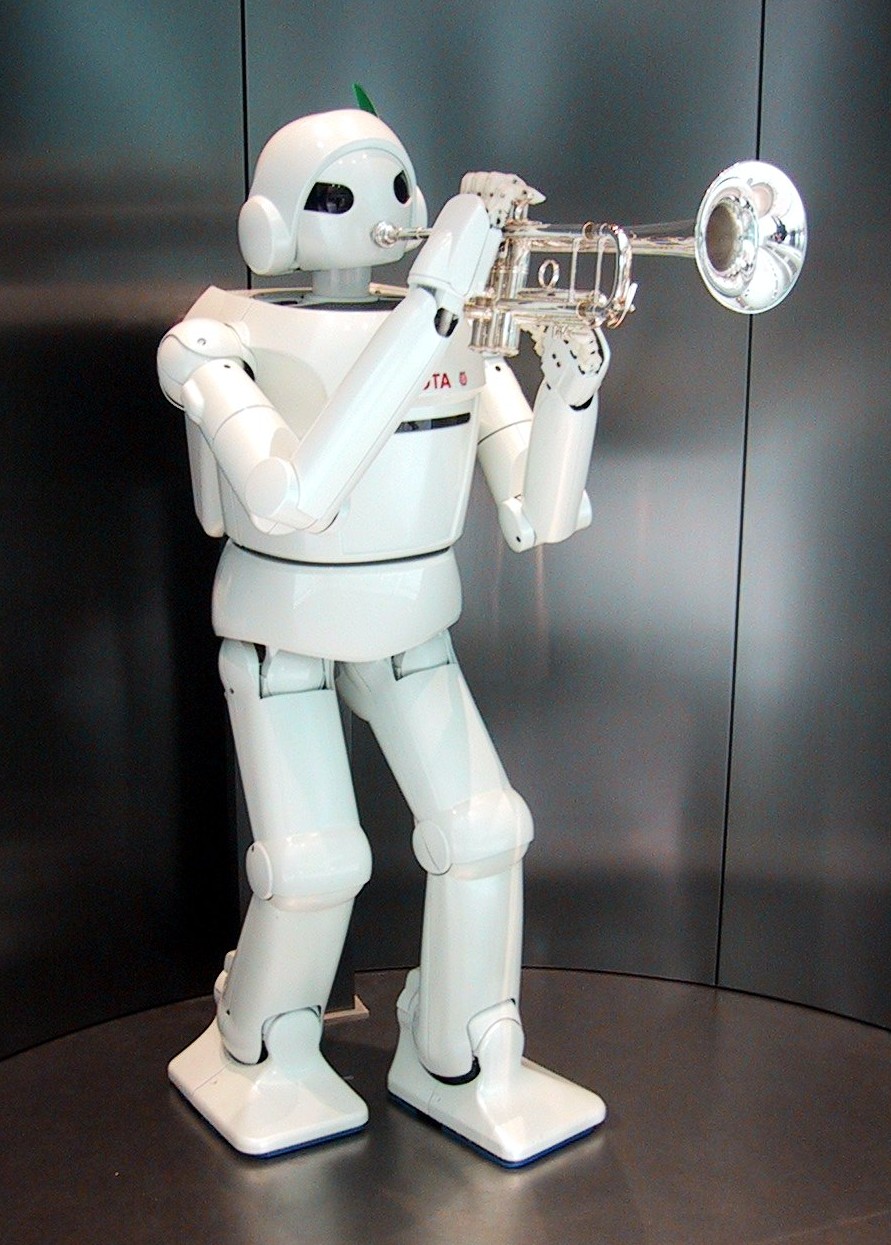
robot? At its core, a robot is a programmable, actuated mechanism possessing a degree of autonomy, capable of performing tasks such as locomotion, manipulation, or positioning. Unlike the organic beings in *R.U.R.*, today's robots are primarily electromechanical devices. Their functionality is prioritized over aesthetics, which is why most industrial robots, for example, look nothing like humans, focusing instead on efficiency and specific task execution. However, humanoid forms like Honda's ASIMO represent the aspiration for versatile, human-like interaction.
The defining characteristics of a modern robot include:
- Sensors: These are the robot's "eyes" and "ears," enabling environmental perception. They collect data on surroundings, object recognition, proximity, and more, allowing the robot to understand its operational space.
- Actuators: These are the "muscles" – the components responsible for motion. Motors, gears, and hydraulic systems drive the robot's limbs, wheels, or grippers, allowing it to move, lift, and manipulate objects.
- Control Algorithms: This is the robot's "brain." Often augmented by advanced machine learning and artificial intelligence, these algorithms process sensor data and direct the actuators, enabling adaptive decision-making and complex task execution.
- Programmability: Modern robots are highly programmable, allowing them to be taught new tasks or modified for different applications without extensive hardware changes.
Robots can be autonomous, operating independently, or semi-autonomous, requiring some human oversight or input. Advances in safety protocols, affordability, and seamless integration with human workflows are constant priorities in the robotics field, ensuring these machines can work alongside, rather than just instead of, people.
Robots in Action: Transforming Industries and Daily Life
The diverse applications of robots today underscore their monumental impact across nearly every sector. Modern robots are broadly classified into several categories, each designed for specialized functions:
- Industrial Manipulators: Dominating manufacturing floors, these robots excel in precision welding, assembly, painting, and material handling. They boost productivity by significantly reducing human error, enabling 24-hour operations, and performing hazardous or repetitive tasks.
- Service Robots: This broad category includes robots for domestic assistance (like robotic vacuum cleaners) and professional services (delivery robots, inventory management systems in warehouses, surgical assistants).
- Mobile Platforms: These robots are designed for navigation and exploration in various environments. Examples include planetary rovers like Perseverance, drones for aerial surveillance, and autonomous vehicles.
- Humanoid Forms: While still a niche, humanoid robots are developed for versatile human-like interaction, assistance in social settings, or research into advanced human-robot collaboration.
The practical benefits are immense. In medicine, surgical robots like the da Vinci system assist surgeons, minimizing invasiveness and reducing patient recovery times. In hazardous environments, robots perform bomb disposal, inspect compromised nuclear facilities, or explore deep-sea trenches, extending human reach without risking lives.
Robots at work: Boosting efficiency across industries is not just a slogan; empirical studies consistently document substantial efficiency gains and increased labor productivity in robot-adopting industries. While causal analyses reveal localized job displacements in certain sectors, these are often offset by broader economic expansions and the creation of new roles requiring different skill sets in advanced economies.
The Future of Robotics: Balancing Potential and Responsibility
The journey of the robot, from its conceptualization as a being of forced labor to a cornerstone of smart automation, is far from over. Ongoing advancements are pushing the boundaries of what these machines can achieve. We are witnessing rapid progress in areas such as artificial intelligence, machine learning, soft robotics, and human-robot collaboration, promising a future where robots are even more integrated into our daily lives and workplaces.
However, with great power comes great responsibility. Debates surrounding the ethical deployment of robots, particularly in areas like warfare, surveillance, and autonomous decision-making, are critical. The impact on employment, the need for robust safety standards, and ensuring equitable access to robot-driven advancements are all complex challenges that demand careful consideration. The goal moving forward is not just to build more capable robots but to ensure their development aligns with societal values, fostering a future where humans and machines can collaborate synergistically, enhancing our capabilities and improving quality of life without compromising human dignity or security.
Conclusion
The evolution of the robot is a testament to humanity's enduring quest for progress. From the etymological roots in "forced labor" to the sophisticated, intelligent machines of today, the robot has transformed from a fictional construct into a tangible force of innovation. What began as a dramatic exploration of artificial servitude has blossomed into a field of smart automation, driving efficiency, extending human capabilities, and addressing complex challenges across every conceivable sector. As we continue to push the boundaries of robotics, the narrative shifts from simple automation to intelligent collaboration, promising a future where robots and humans work hand-in-hand, creating opportunities and shaping a world that is more productive, safer, and ultimately, more advanced.